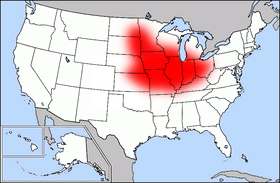
The USGS is reporting (or was, on November 9th) that the amount of pesticides has decreased in the waters of America's "Corn Belt". For those of you unaware, the Corn Belt is an agriculturally dominated region of the Middle United States, centered mainly over Iowa, Missouri, Illinois, Indiana and Ohio.
The USGS study states that pesticide levels have dropped over the decade-long period from 1996 to 2006. This is a direct result of fewer applications, mandated by the EPA, to corn plots throughout the region.
Pesticides which were accounted for were mostly herbicides applied to corn and soybean farmland in order to control weed growth. In total, eleven chemicals were monitored, including acetochlor, cyanazine, metolachlor. Though most levels declined due to enforced reductions in applications, S-metochlor was introduced, which was stronger in concentration than it's predecessor, thus reducing the amount in rivers.
How does "solid" geology work into it all? Skip Vecchia has the answer:
“The steeper decline in these instances (EDIT: atrazine and metolachlor) may be caused by agricultural management practices that have reduced pesticide transport, but data on management practices are not adequate to definitively answer the question. Overall, use is the most dominant factor driving changes in concentrations.”
However, not all pesticide concentrations decreased over the time. Simizine, a pesticide which can also be used domestically, as well as along roadsides by transportation departments, rose more sharply than the usage trends would suggest.
Rivers surveyed were included within the Upper Mississippi, Ohio and Missouri watersheds.
Source: Pesticide Levels Decline in Corn Belt Rivers. Bob Gilliam, USGS.
You can take a look for yourselves at the following websites:
USGS Newsroom: Pesticide Levels Decrease in Corn Belt Rivers